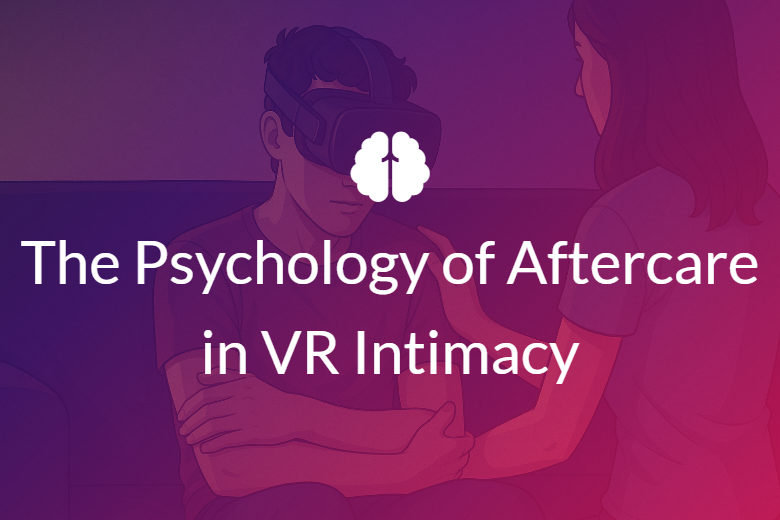
VR intimacy can blur the boundaries between fantasy and reality more than people expect. When the brain interprets virtual touch, eye contact, or closeness as real, the emotional response often follows: excitement, vulnerability, tension, or even unexpected attachment.
That’s why aftercare matters. Just like in real-world intimacy, winding down after immersive experiences helps users rebalance, process emotions, and safely return to the physical world. In this article, we explore why VR fantasy feels so real and how proper aftercare supports psychological well-being.
TL;DR
- Strong presence creates strong feelings, and that is normal in VR intimacy.
- Aftercare routines help you reset, rebalance, and stay grounded.
Why VR hits different
VR intimacy affects people more deeply than traditional media because it removes the safe distance between the viewer and the experience. Instead of observing from the outside, you step into a scene and your brain treats it as something happening to you in real time.
Even when you know it is simulated, the sensory cues and interaction tricks convince your nervous system to respond as if the moment is genuine. This creates emotional weight, physical reactions, and lingering feelings long after the headset comes off.
Several psychological factors amplify this effect, which is why VR intimacy can feel sharper, closer, and more intense than anything on a flat screen.
Presence: when the brain forgets it is virtual
Presence is the core illusion that makes VR so powerful. When visual, audio, and spatial cues match what the brain expects in a real environment, your body automatically reacts. Heart rate increases, muscles tense, and mirror neurons fire as if you are actually there. Presence turns fantasy into something that feels almost lived.
POV immersion: your viewpoint becomes the story
Point of view in VR is not just a camera angle. It is your perspective. When your head movements control the scene and characters look directly at you, the experience becomes personal. This direct embodiment creates a sense of involvement that cannot be replicated on a normal screen, making every action and reaction feel directed toward you alone.
Parasocial pull: simulated closeness feels personal

Even when characters are digital, the brain responds to them as social beings. Eye contact, conversational tone, and intimate proximity naturally trigger social bonding responses. This is why VR connections often feel more meaningful or emotional than expected. The mind recognises these characters as people in your space, which can heighten attachment, affection, or vulnerability.
Signs you need aftercare
VR intimacy can leave a stronger imprint than expected, and the body often reveals it before the mind catches up. Emotional signals may show up as lingering vulnerability, overstimulation, sudden sadness, or an unexpected sense of attachment to a scene or character. Some users also experience a quiet “comedown” feeling, where the shift from virtual closeness to real-world stillness feels abrupt or disorienting.
Physical signs can be just as telling. Increased heart rate, tension in the shoulders, shallow breathing, or an adrenaline dump after the session are all indicators that your nervous system stayed “inside” the experience longer than you intended.
Feeling unusually drained, shaky, or restless can also mean your body needs time to reset. When these reactions appear, aftercare helps you transition back to baseline, reconnect with your surroundings, and process the experience in a healthy way.
Grounding techniques
Grounding techniques help your mind shift out of the emotional weight of VR intimacy and back into your physical surroundings. They give your nervous system a gentle way to slow down, reduce overstimulation, and reconnect with the real world. Even when the experience was positive, grounding provides a sense of closure that makes the transition smoother.
Controlled breathing to calm the nervous system
Breathwork is one of the fastest ways to bring your body out of a heightened state. A slow inhale for four counts, a brief two-count hold, and a long six-count exhale helps signal that the emotional moment has passed. This pattern reduces your heart rate and softens any adrenaline spikes left over from the VR session.
Repeating this cycle a few times can ease muscle tension and create a sense of physical safety. Many users find that focusing on the rhythm of their breath helps the mind release any lingering intensity and return to a more neutral internal state.
Environment resets to reconnect with reality
A strong grounding reset begins by engaging your senses. Look around your room, identify familiar objects, and touch real surfaces to remind your body where it actually is. Changing the lighting, opening a curtain, or stepping into another room helps break the immersive spell that VR can create.
You can also enhance the reset by moving your body. Stretch your arms, walk a few steps, or drink water to reconnect with physical sensations. These small actions create a clear separation between the virtual world and your real environment, which helps you regain control and orientation.
Journaling to process lingering thoughts
Journaling offers an effective way to make sense of any emotional or physical responses that surfaced during VR intimacy. Writing gives shape to your feelings and helps you understand why certain moments left a strong impression. Even a short note about what stood out can bring clarity and closure.
Over time, these entries can reveal patterns, triggers, or preferences you would not notice otherwise. Journaling also helps your brain shift from immersive mode to reflective mode, which is ideal for calming overstimulation and reinforcing personal boundaries after a powerful session.
Boundary setting with AI, personas, and content choices
Healthy boundaries are essential when exploring VR intimacy, especially when experiences feel personal or emotionally charged. Setting limits on how you interact with AI-driven characters, performers, or fantasy personas helps protect your sense of self and prevents emotional spillover.
This can include choosing the types of interactions you are comfortable with, avoiding scenarios that feel too intense, and recognising when a character’s realism starts affecting your mood outside the headset. Being intentional with your choices keeps the experience enjoyable rather than overwhelming.
Content boundaries matter just as much. Curating what you consume, when you consume it, and how often you use VR intimacy tools can help you avoid overstimulation or emotional fatigue.
Couples debrief: consent, check-ins, reconnection
When couples explore VR intimacy together, communication after the session becomes just as important as communication before it. VR can stir up emotions, insecurities, surprises, or unexpected reactions that feel more powerful than either partner anticipated. A structured debrief helps both people understand how the experience landed, reinforces trust, and ensures that the emotional connection stays grounded in the real relationship.
A couple’s debrief is not a heavy conversation. It is a calm, supportive space to share observations, talk through feelings, and reconnect physically or emotionally after the headset comes off. These check-ins strengthen intimacy, encourage mutual respect, and prevent misunderstandings that might arise from immersive scenes.
Consent review to stay aligned
Consent does not end when the VR session begins. Reviewing how each partner felt about the choices made in the experience creates a healthy, open dialogue. You can talk about what felt comfortable, what felt too intense, and whether any boundaries need adjusting before trying something similar again. This reinforces the idea that consent is continuous and adaptable.
It also gives each partner space to share thoughts without judgment. When both people feel heard, the next VR session becomes safer, more enjoyable, and more aligned with each person’s emotional needs.
Check-ins to validate emotional responses
Check-ins help partners understand each other’s internal experiences. Even small comments like “That was fun,” or “I feel a little overwhelmed,” can open the door to deeper conversations. VR can bring up feelings that seem out of place, such as unexpected attachment, self-consciousness, or adrenaline-heavy excitement. Naming those reactions reduces ambiguity and builds trust.
These check-ins also help couples adjust the pace of their VR journey. If one partner felt overstimulated or disconnected, the next session can be tailored to be calmer or more collaborative. If both felt energised and close, they can build on that shared momentum.
Reconnection to shift from virtual to real intimacy
Reconnection rituals help couples transition from the virtual scenario back into their real relationship. This can be as simple as a hug, shared laughter, cuddling on the couch, or talking about your favourite parts of the session.
Gentle physical contact or grounding touch helps the nervous system settle and reminds both partners that the primary intimacy is with each other, not the VR environment.
These moments bring the focus back to the bond you share. Reconnection ensures that VR enhances the relationship rather than overshadowing it, and it helps both partners feel emotionally secure and deeply connected once the headset is off.
When to seek support
Most VR intimacy reactions are normal and settle with simple grounding and aftercare, but there are times when extra support can make a meaningful difference. If you find yourself feeling consistently anxious, emotionally detached, unusually irritable, or unable to shake lingering scenes, it may be a sign that the experience touched something deeper than expected.
This does not mean anything is wrong with you. It simply means your emotional system needs more guidance and care than self-regulation alone can provide.
Support becomes especially important if VR intimacy starts affecting your sleep, your relationships, your concentration, or your sense of emotional balance. When immersive experiences begin to overshadow real-life interactions, or when you notice strong attachment to personas or characters that feels disruptive, reaching out can help you understand what is happening and regain control.
Seeking support is a healthy step, not a failure.
Helpful resources
You can explore these options if you need help processing intense VR experiences:
- Licensed mental health professionals who understand technology-driven intimacy
- Online therapy platforms that offer flexible, private sessions
- VR wellbeing communities that discuss grounding, boundaries, and emotional recovery
- Articles and podcasts on digital intimacy, emotional regulation, and immersive media
- Mindfulness apps that guide breathing, grounding, or calming body scans
- Couples therapists who specialise in communication and consent
Five-minute aftercare routine
A simple aftercare routine can help you settle quickly after an intense VR intimacy session, and couples can benefit from a brief debrief to stay aligned and connected. These fast checklists keep things easy, practical, and grounded without turning the moment into a long conversation or ritual.
Five-minute aftercare routine
- One minute: slow breathing to calm your heart rate.
- One minute: stretch your neck, shoulders, and back.
- One minute: reconnect with your environment by touching real objects.
- One minute: hydrate and take a few steady breaths.
- One minute: reflect on how you feel and name the emotion.
Couples debrief prompts
- What part of the experience felt good or fun for you?
- Did anything feel too intense, surprising, or uncomfortable?
- Do you want to adjust any boundaries for next time?
- What did you enjoy most about doing this together?
- How do you feel right now, and what would help you feel even more connected?
FAQ
Why do VR scenes affect my mood hours later?
VR can trigger real emotional and physiological responses because your brain treats the experience as genuine. When presence and immersion are strong, your nervous system may stay activated long after the session ends, which can influence your mood for several hours.
What quick grounding exercises work best?
Slow breathing, touching real surfaces, drinking water, and changing your environment are the fastest ways to reset. Anything that re-engages your senses helps your body realise the experience is over.
How do I avoid parasocial over-attachment?
Set clear boundaries around how often you use certain characters or scenes, and take breaks when you notice a strong emotional pull. Pair VR use with grounding habits and keep your social and emotional life rooted in real-world relationships.
How do couples debrief without awkwardness?
Keep it simple and supportive. Ask each other short, open questions about comfort, emotions, and favourite moments. Focus on curiosity rather than judgment, and treat the debrief as a way to strengthen the connection.
When is it time to take a break?
You may need a break if VR intimacy starts affecting your sleep, mood, or relationships, or if you feel emotionally overstimulated or detached afterward. Stepping back helps you reset and reconnect with the physical world.